


Email: info@chinavisafreelayovertour.com
Phone: +86-13683536536
WhatsApp/iMessage: +86-13683536536
WeChat: +86-13683536536

Member
Beijing Capital Airport Layover Tours
Beijing Daxing Airport Layover Tours
Private Tour
1 Person $207
2 Person $135
3 Person $116
4 Person $103
5 Person $97
6 Person $88
7 Person $81
8 Person $77
9 Person $76
10 > Person $74
Price Per Person in USD

Travel personnel
Number of rooms
Price : $1269
 NO HIDDEN CHARGES
BEST PRICE GUARANTEE
CATCH UP FLIGHT GUARANTEE
FREE WARM COATS
NO HIDDEN CHARGES
BEST PRICE GUARANTEE
CATCH UP FLIGHT GUARANTEE
FREE WARM COATS
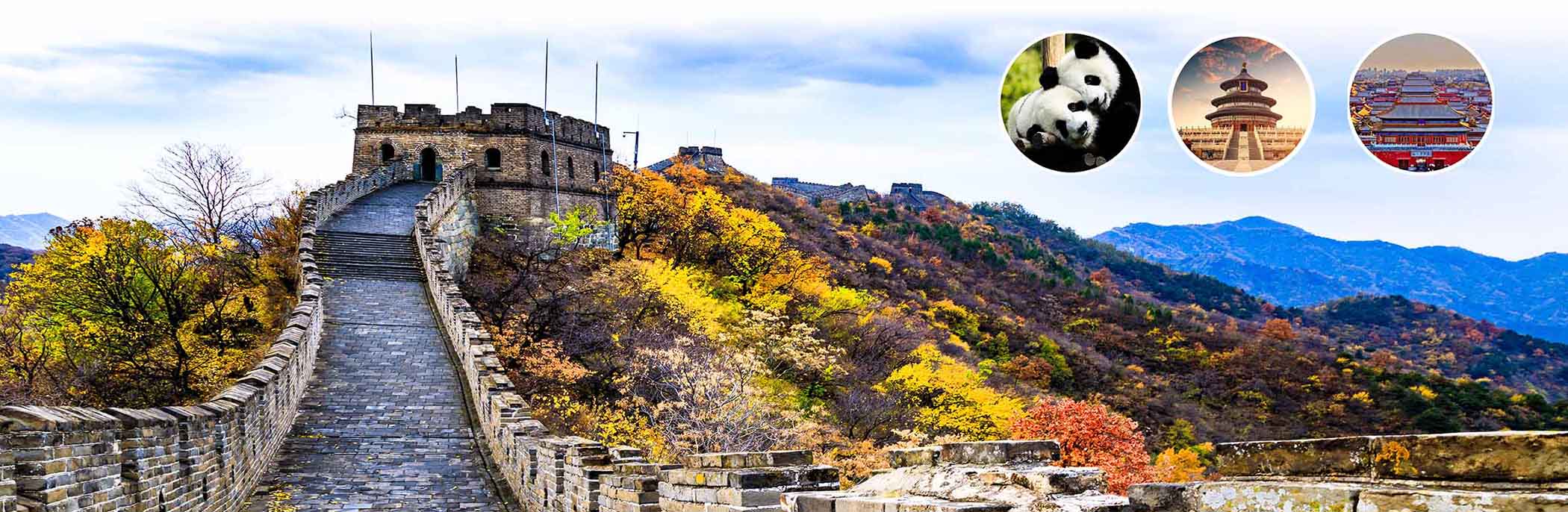
Are you going to have a long layover in Beijing? Take the best chance to know and visit the most famous, historical and cultural sites in Beijing, such as the Tiananmen square (the most important square in the whole China), the Forbidden city (ancient home of emperors) and Mutianyu Great Wall (one of the new 7 wonders of the world). Our professional tour guide and driver will pick you up at the airport, we will take you for a quick Beijing tour and get you back on time for your next flight. booking this layover tour can be a memorable part of your epic trip!
Tour Itinerary
Travel Calendar


Day 1
Airport Pickup, Beijing Zoo, Bell and Drum Tower, Hutong, Transfer to Airport
Your friendly tour guide and driver will greet you at Starbucks Coffee in Beijing Capital Airport Terminal 2 or 3. (You will need about 1-1.5 hours to finish the customs clearance and get out)
~ 1 h : Drive to Beijing Zoo
Your friendly tour guide and driver will hold your name board and greet you at the arrival hall exit of Beijing Daxing International Airport. (You will need about 1-1.5 hours to finish the customs clearance and get out)
~ 1.5-2 h : Drive toBeijing Zoo
~ 30 mins : Visit Beijing Zoo
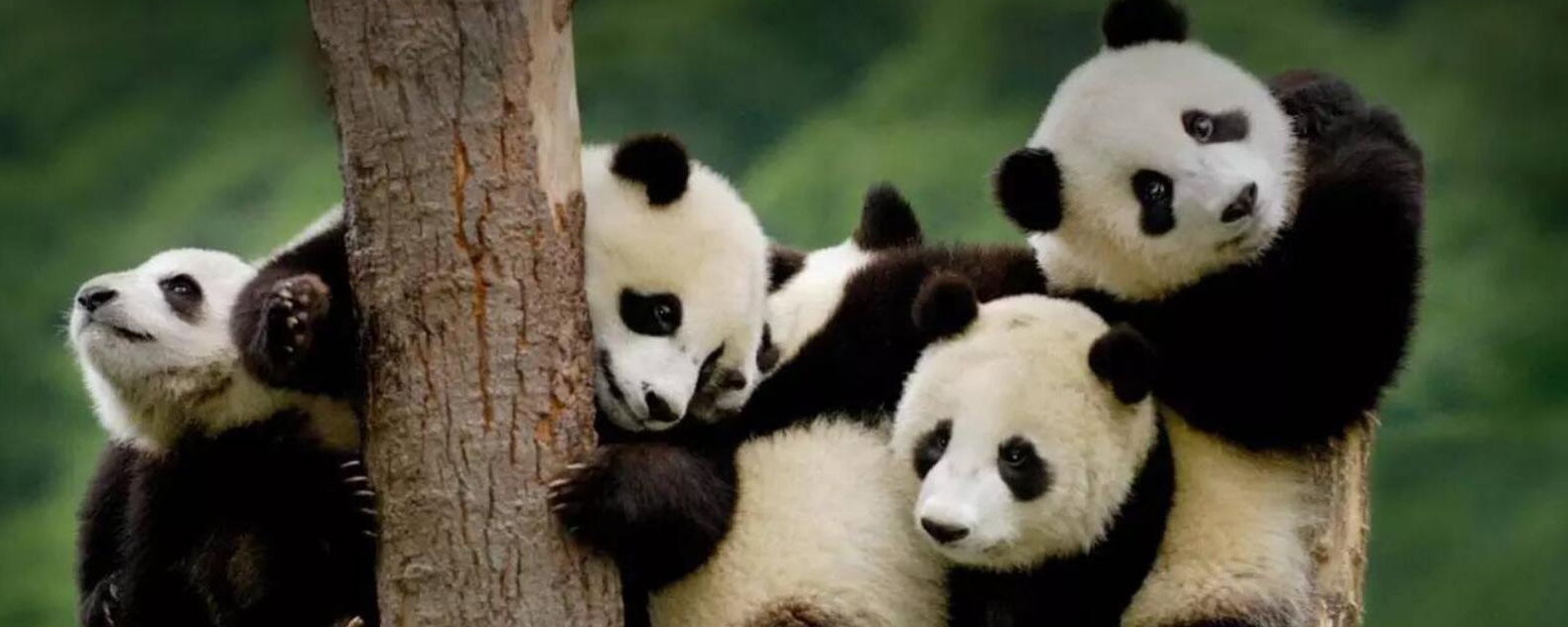
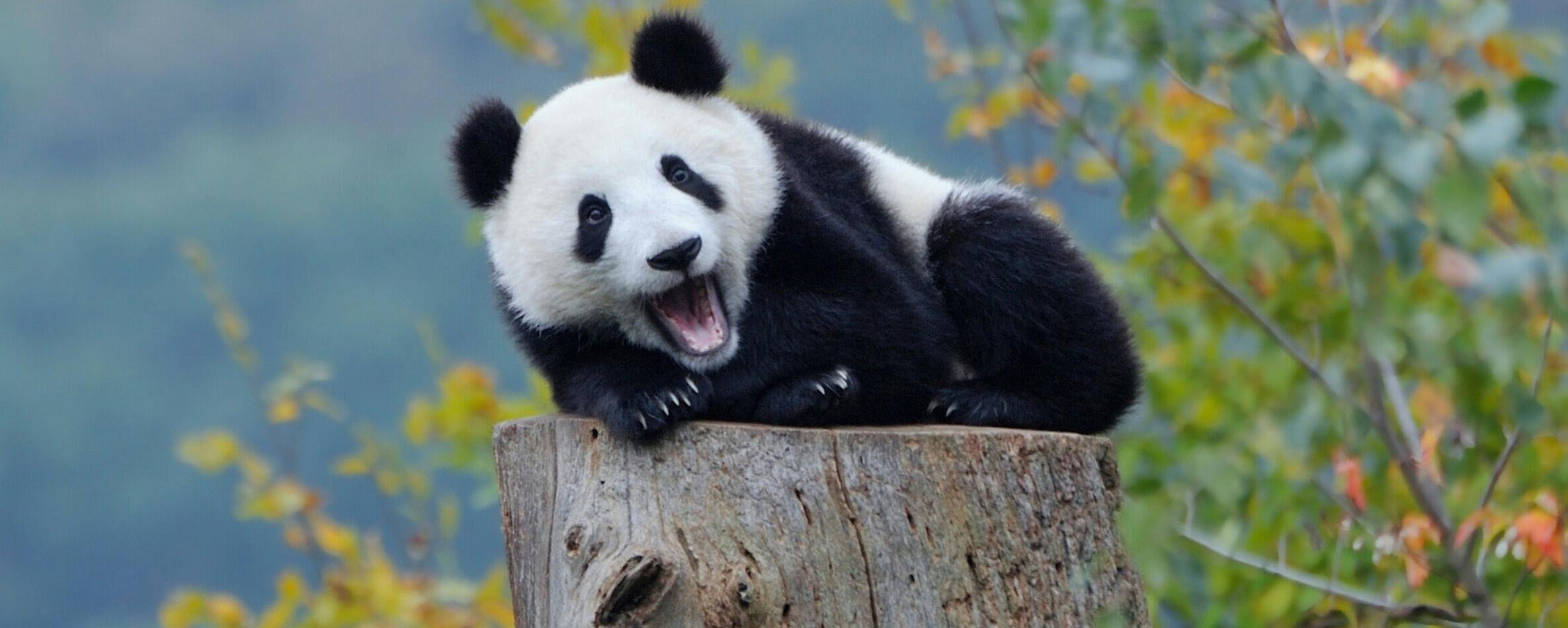
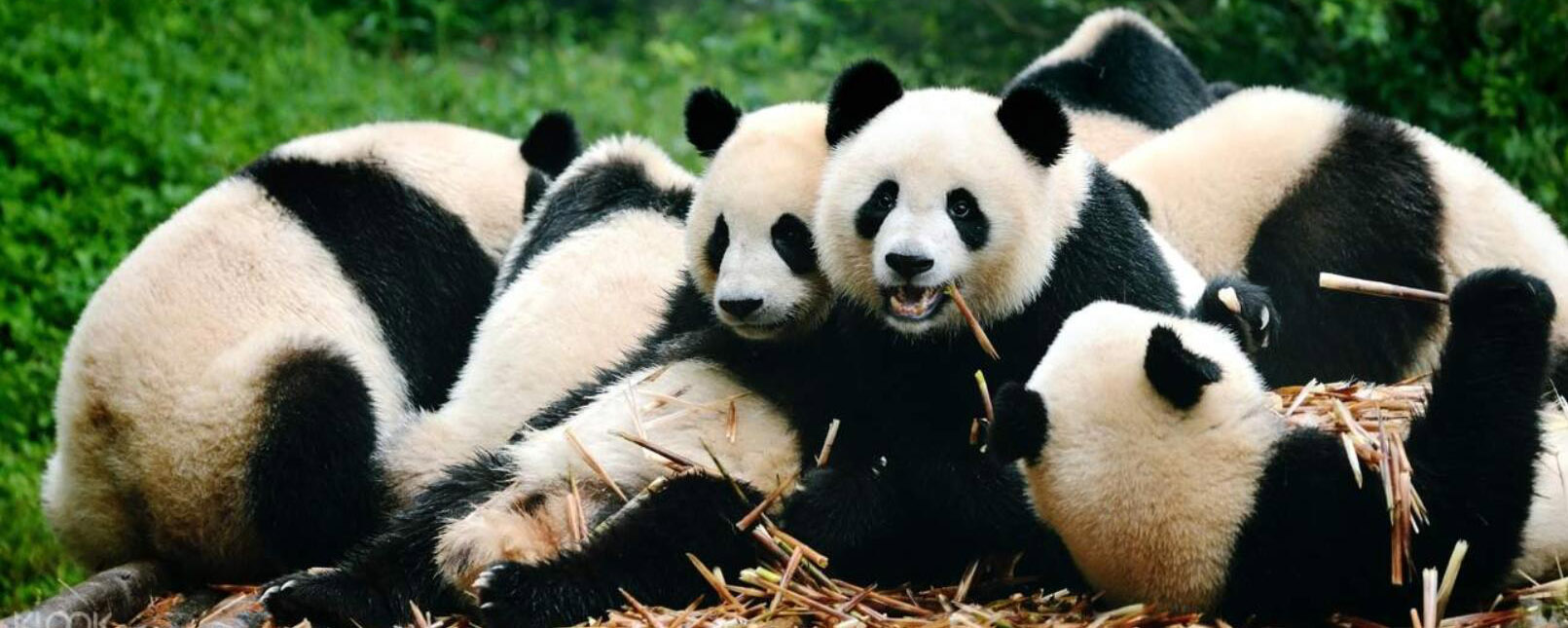
 Start off by visiting the Beijing Zoo for the gorgeous pandas, watch them eating bamboo, climbing, sleeping etc.
~ 15 mins : Drive to Bell and Drum Tower
~ 20 mins : Visit Bell and Drum Tower
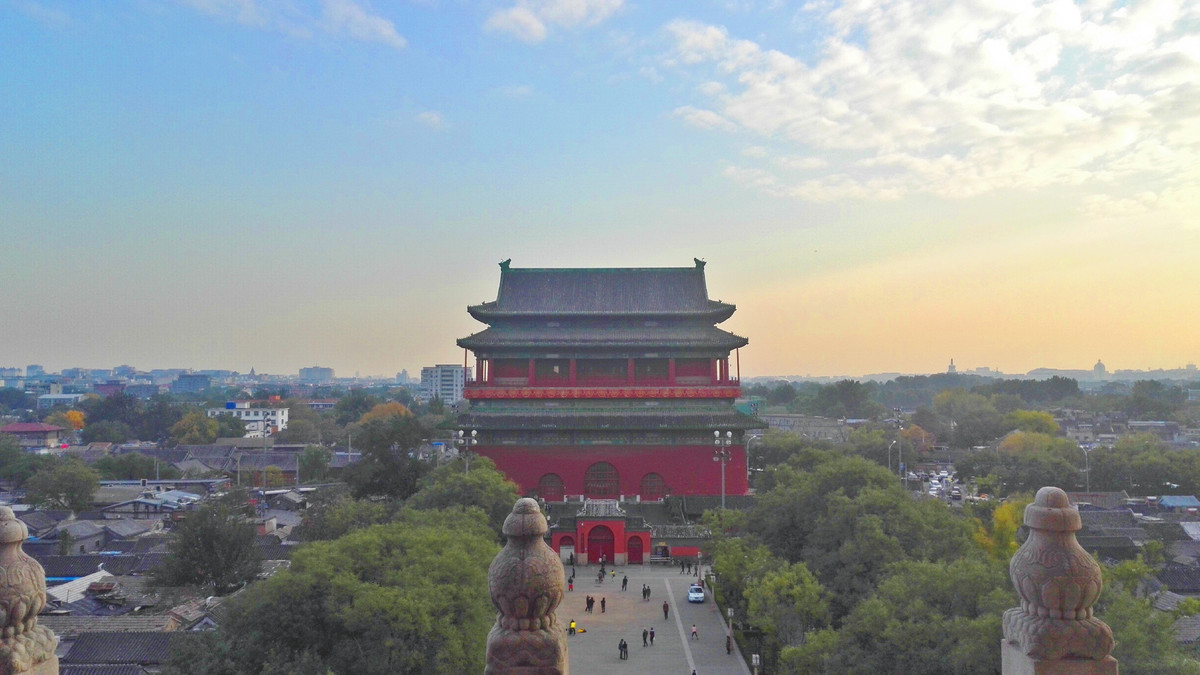
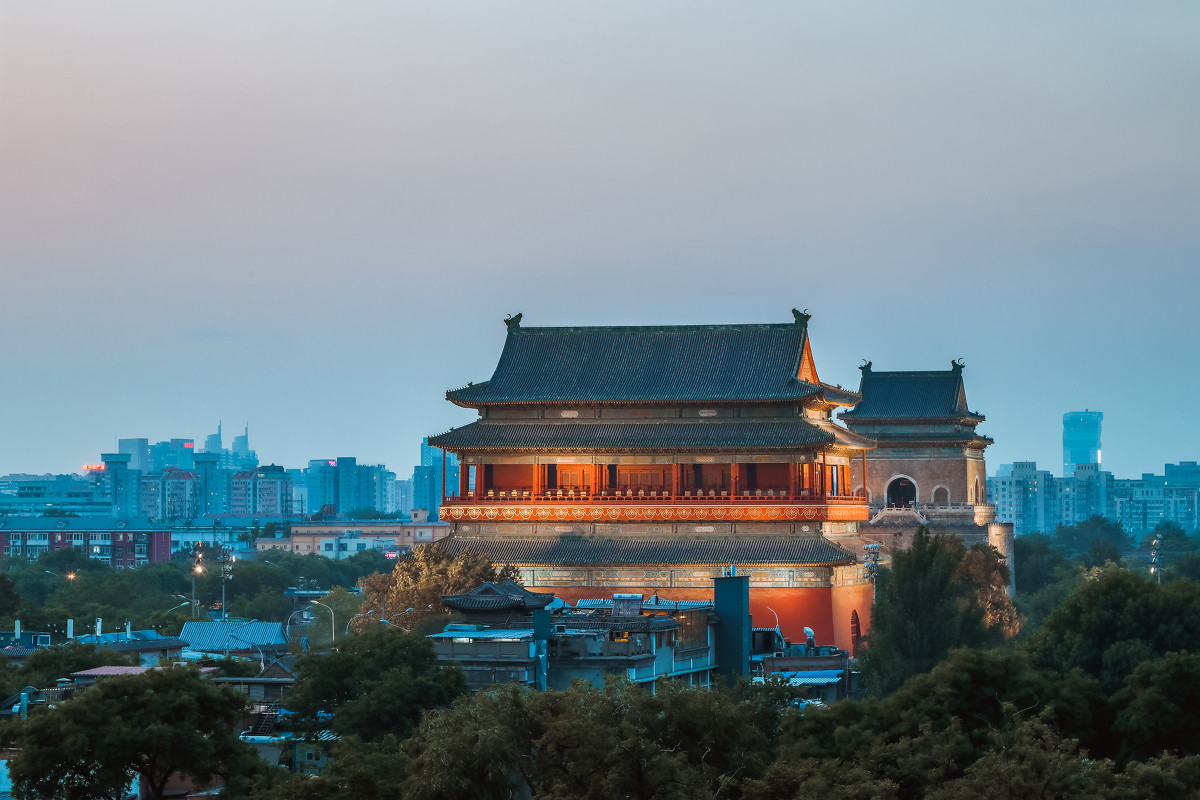
Proceed to the Bell and Drum Tower to witness ancient ways of indicating time with only one out of 25 drums that existed back in the days that is now hit four times a day for 15 minutes to indicate time.
~ 10 mins : Drive to Hutong
~ 2 h : Visit Hutong
Head to the Hutongs by rickshaw, pay attention to the historical alleyways and the aspects of the architectural beauties in this traditional courtyard. Enjoy delicious lunch while a family visit and treat with freshly brewed Chinese tea.
~ 1 h : Transfer to Airport
The driver will transfer you to the airport for a flight to your next destination. Have a nice journey!
~ 1.5-2 h : Transfer to Airport
The driver will transfer you to the airport for a flight to your next destination. Have a nice journey!
Itinerary
Beijing Capital Airport Layover Tours:
Your friendly tour guide and driver will greet you at Starbucks Coffee in Beijing Capital Airport Terminal 2 or 3. (You will need about 1-1.5 hours to finish the customs clearance and get out)
1 h

Beijing Daxing Airport Layover Tours:
Your friendly tour guide and driver will hold your name board and greet you at the arrival hall exit of Beijing Daxing International Airport. (You will need about 1-1.5 hours to finish the customs clearance and get out)
1.5-2 h

Watch adorable giant pandas playing in the zoo
Take pictures for pandas and save the happy moment
15 mins

Trace the Chinese history from enormous ancient bell and drums
Enjoy the spectacular ancient building
10 mins

Wind through a labyrinth of alleyways and explore hidden delicious food
Experience centuries-old Chinese history from hutongs and courtyards
1 h
Beijing Capital Airport Layover Tours:
The driver will transfer you to the airport for a flight to your next destination. Have a nice journey!
1.5-2 h
Beijing Daxing Airport Layover Tours:
The driver will transfer you to the airport for a flight to your next destination. Have a nice journey!
Includes & Excludes
Entrance fee
Private vehicle and driver
English speaking tour guide
Airport pickup and drop off service
Lunch
Rickshaw
Tips to tour guide and driver
Booking Notes
Private Beijing Layover Tour:
The private layover tour is only for you and your team, no need to wait for other travelers. Time-saving.
More flexible for picking up time and address according to your flight details, will send you back to the airport or hotel according to your request.
If your flight delayed, your private tour guide will extend 2 hours of your pick up time wait until seeing you at the airport.
Can customize tour itinerary according to your interests
Payment Methods
Please book your layover tour on the website in advance, and you can pay full payment or a half deposit through PayPal or optional credit card when booking online. Confirmation will be received at the time of booking.
Cancellation Policy
If your flight is canceled or delayed and you inform us at least 4 hours in advance before the scheduled pick-up time, there is no cancellation fee.
If you are not able to get out of the airport for some reasons and inform us before your pick up time, we will refund part of tour fee to you (Excluding driver and guide airport transfer charges). Beijing layover group tour is not refundable.
Reviews

 Review
 Review

benniejay
Yes everything was spectacular and fascinating very professional and prompt services. There were beautiful places to explore and to see in the 4 hours that we had. The comfort and beauty of the China was incredible, The history, culture and way of life of the local people we bumped into during the layover was beyond our expectations. Hiking on the Great wall after driving through a small remote countryside was very relaxing and rejuvenating. It was the best trip ever to experience on a few hours.
We had not previously used a travel agency for touring. The crew including the driver and tour guide were really funny, friendly and knowledgeable. Despite having limited time we still had free time allowing for shopping and grabbing a meal and drinks. Highly recommend this layover in Beijing. Show less

mirceao455
Bucharest, Romania
Great, compact, amazing tour. Our guide Jenny did the best to show us the most important attractions in Beijing in just a 2 day tour. I recommand her tours, she is great with groups, friendly and well prepared. Show less
More
2funworldtravers
Mike and Karen, Tucson, Arizona Show less
More
pedro148595
Highly recommend for everyone coming to Beijing Show less
MoreFAQ
Got Question & Quick Answer


©2013- www.chinavisafreelayovertour.com

Price

Itinerary

Booking Notes

Reviews

FAQ

User Name:
Email:
Password:


Confirm Password:
Verification Code:
Email:
Password:
Email:
New Password:
Confirm Password:
Verification Code:


Beijing Zoo
Introduction
Beijing Zoo is located on Xizhimenwai Street in downtown Beijing, Xicheng District. It was built in 1906 during the Qing Dynasty at a time when the zoo only occupied an area of only 10 hectares with just a few pavilions and was popularly known as wansheng garden meaning ten thousand animal garden but was renamed to Beijing Zoo in 1955. The zoo now occupies an area of 222 acres and is home to at least 600 animal species making a total of up to 5,000 animals. Over the years, the zoo has fostered a good relationship with other zoos in over fifty countries hence representing unique breeds. There are hippos, pandas, elephants, rhinos, golden monkeys, amphibians, giraffes and orangutans among many other animal species.
To make it more inhabitable, there are man made zones such as hills for lions, Siberian and bengal tigers, monkeys, white and black bears, deers, pheasants, jaguars, panthers, clouded and amur leopards amongst other african and Australian animals. The zoo is made up of 16 different exhibition halls with the most popular one being the Panda Hall built in 1989 occupying an area of 2.5 acres. This space is big enough to house the cute yet humongous pandas in buildings resembling ancient Chinese buildings shaped in Tai Chi patterns in the most aesthetic form.
Then interaction of the Chinese government contributed to the immense growth and development of the zoo giving visitors from both home and abroad the chance to come face to face with exotic animals and their interaction with their habitat.
Things to do and see on a visit
Most tourists visit the Beijing Zoo with the soul purpose of seeing giant pandas but the zoo is also home to rare Chinese species like the Sichuan golden monkey, Indian elephant, Golden Monkey, yaks, Manchurian tigers, sea turtles, giraffes and zebras from Africa.
Pandas in panda houses
The Panda House is located near the gate of the zoo. Pandas are the most visited animals in the zoo. They are housed in panda houses and there is the Asian Games Panda House and Beijing Olympic Games Panda House. In 1978, artificial insemination was used to breed pandas for the first time in the world at the zoo and in March 1955, it began to exhibit the huge pandas for the public to see. In 1992, the artificial breeding method was officially accepted to breed and raise giant panda cubs.
The Asian Games Panda House was constructed in 1990 during the 1990 Asian Games when the giant panda Pan Pan was the mascot of the 11th Asian Games that were held in Beijing. The giant panda Jing Jing was then selected to be one of the mascots of the 29th Olympic Games in 2008. These panda houses are very habitable because their architectural design resembles the natural habit of pandas like that of central China in Chengdu full of bamboo trees and lush greens.
Beijing Aquarium
This aquarium was opened in 1999 and is the largest inland aquarium in the world measuring 35,000 square meters and in the park it is situated in the northeast side. The aquarium takes the shape of a gigantic ocean trumpet shell. It is divided into zones: the Hall of the Shark, the Ocean Theater, the Hall of Tropical Rain Forest and the Ocean Library and Reading Hall amongst many more.It features numerous aquatic species such as precious Chinese sturgeon, sea elephants and fierce sharks.
At the aquarium, visitors get to mesmerize at dolphin shows, whales and sea lions in the aquarium ocean theatre. Furthermore they get a feeling of harmony with the sea through a dynamic visible ocean bottom that presents extensive sea life through close proximity as if they are deep at the bottom of the ocean.
Historical sites
The zoo is rich with historical sites and visitors can see sites like the Changguan Tower which is a two storey baroque style building made of wood and bricks. This tower was home to Empress Dowager Cixi (1835-1908) in the late 19th century, Sun Yat-sen (1866-1925); the founder of the Kuomintang and the ruler of the Qing court between 1861 and 1908.
In addition to this there is the Lemarck Hall which is now used as a Chinese Botanical Science Research Base but was initially built to commemorate the life of Lemarck (1744-1829) who was a renowned French historian. Also in the vicinity is the Song Jiaoren Memorial Tower set up to commemorate Song (1882-1913) who was one of the early leaders of the Kuomintang, but was assassinated soon after he was elected as China's premier in 1913.
Halls
Halls and exhibition in the zoo were articulately constructed to make it fit for the animals to have a cosy living environment and to display the history of the zoo of over 100 years. At the Gorilla Hall is a collection of artificial hillocks and wooden apparatus for the animals which sit against a backdrop of attractive gorilla murals. which was constructed in the early 1987.
Facilities introduced for the gorillas include a medical room, a mating room and a specialist feeding room. The hall itself is decorated by a series of rockeries and pools. The Changguan Hall, built as Xanadu in 1908, is a two-storey building in the European style, yet it isn't open to the public. In addition to the animals, visitors can also appreciate the peonies in a peony garden.
Bell and Drum Towers
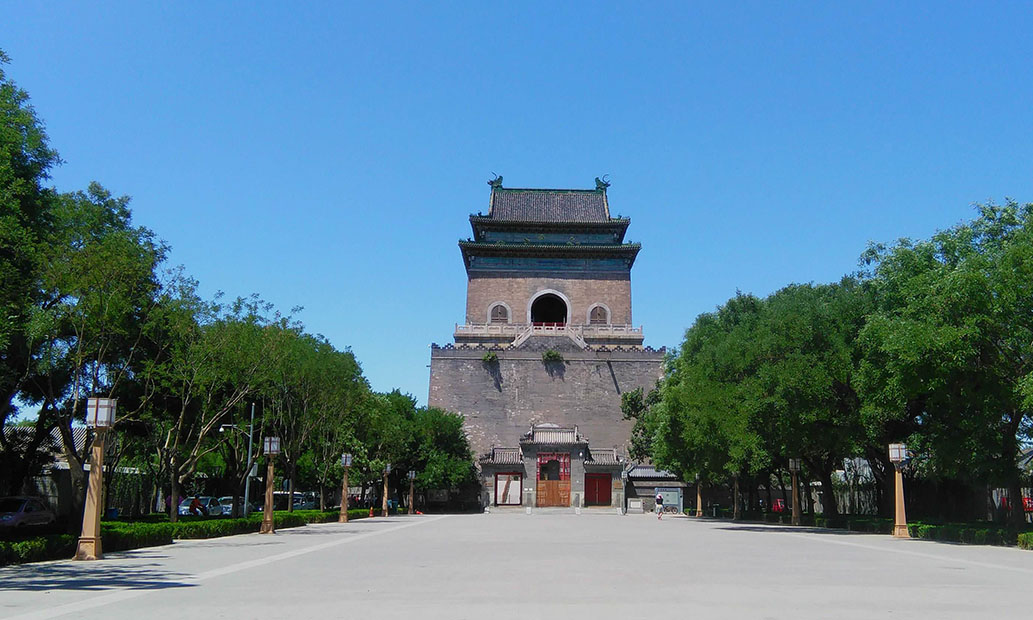
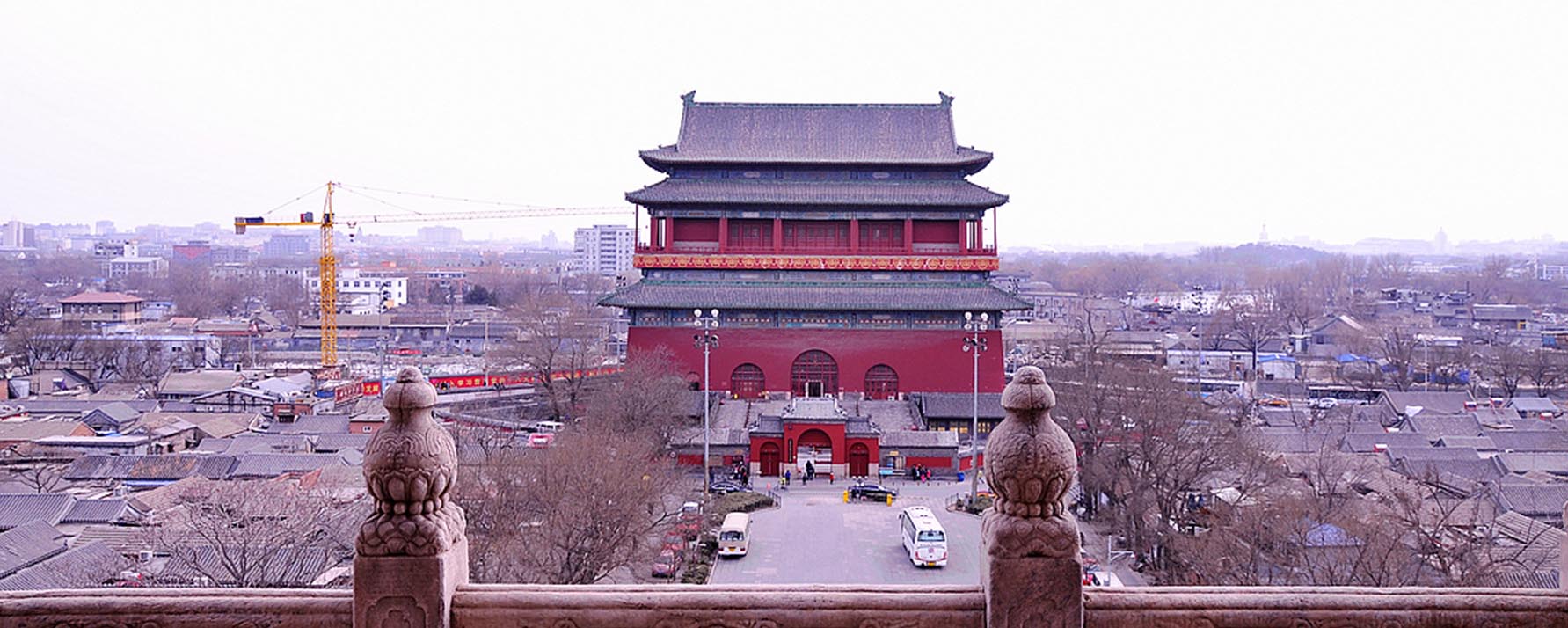
Drum and Bell Towers
Introduction
Located on the north south axis line of Beijing City on a small square north of the Forbidden City, the towers were used for telling time until 1924. They were built in 1272 during the reign of Kublai Khan and were rebuilt after two fires during the Ming and Qing dynasties. During ancient times in the Ming, Qing and Yuan Dynasties they were used to tell time but they were originally constructed for musical purposes. In the Han Dynasty (206 BC-220) people didn’t have a means of keeping time so there used to be a morning bell and a dusk drum that guided people to keep time as they lived and worked. Over time these structures became widely constructed in almost every city in China for the sole purpose of telling time. They were always conspicuous as they were humongous and very high and took the fore and aft layout opposed to the traditional right and left layout.
Legend has it that long time ago there used to be an iron bell in the tower but it was not resonant enough. So the emperor gathered all the best artisans to cast another magnificent bell but three years passed without them achieving the goal. Frustrated, the emperor beheaded the supervising eunuch and then again ordered the artisans to finish the bell within 80 days or else he would behead all of them. Days passed they worked day and night without stopping and on the last day, Hua Yan; the artisan who was in charge was told by his own daughter, Hua Xian that the furnace temperature wasn’t high enough to cast the desired bell so to save his father’s life she jumped into the smelter making the fire blaze powerfully and strongly to the point that the perfect bell was cast. To this day people remember Hua Xian as the Bell Lady to honor her lifetime sacrifice. The huge copper bell hangs at the top of Beijing Bell Tower called and is known as the King of Ancient Bells because its sound can be heard from a long distance away.
Things to do and see on a visit
Drum Tower
Standing at 47 meters high, the Drum Tower was originally built in 1272 during the reign of Kublai Khan but was later rebuilt in 1297, 1420 and 1539. Visitors can see a two-storey structure that was made of wood and on its second floor were 25 drums. One big drum and 24 other smaller drums.
The big drum symbolizes a year and the 24 small drums symbolize 24 solar terms of China. Currently, there is only the big drum that has been hit four times a day at 15 minutes intervals. Every New Years Eve, they are also beaten together 108 times to send blessings to the people of China.
In addition to seeing the humongous drum visitors can also shop for souvenirs at the many stores on the first floor of the building. Visitors can now ascend the tower to have a birds-eye view of the entire city and knock the drums in addition to watching dragon and lion dances.
Bell Tower
The bell tower is situated on Di'anmen Outer Street in Dongcheng District of Beijing at the place where the northern end of the Beijing axle line is located. It is around 100 meters north of Beijing Drum Tower and was first built in the ninth year of Zhiyuan (1272 AD) as the central court of the Wan Ning Temple in the Yuan Dynasty but was destroyed in the war.
The Drum Tower was later rebuilt in the 18th year (1420 AD) of the Ming Dynasty as a bell tower but was unfortunately destroyed again. It was then reconstructed using a brick masonry structure to prevent it from catching fire in Qianlong in the 10th year (1745 AD) of the Qing Dynasty.
The building has two floors, an arched door on all four sides on the first floor and the second floor. In addition, there are stone stairs and a stone window on each side of the four doors. On the second floor is the largest and heaviest bell in China hanging on an eight square wooden frame. The octagonal bell cot with a huge copper bell cast in it measures 7.02 meters in height, 3.4 meters in diameter and 63 tons in weight. The bell is referred to the King Bell since it was the biggest and heaviest ancient bell in ancient China and it also made the most powerful sound that could be heard from dozens of miles away. Initially, the iron bell was rung in the Yongle era but its sound wasn’t as pleasant and was later replaced by the copper bell but it remains against a wall and has been part of the collection belonging to the Ancient Bell Museum attached to the Great Bell Temple for many years. They are also two 2 meters long wooden logs hanging sidewards that are used to ring it
Hutong
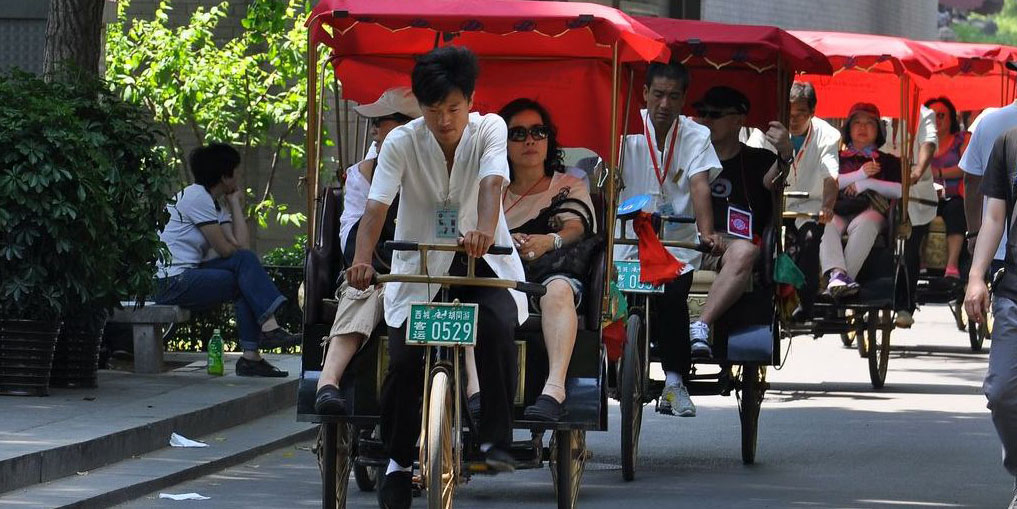
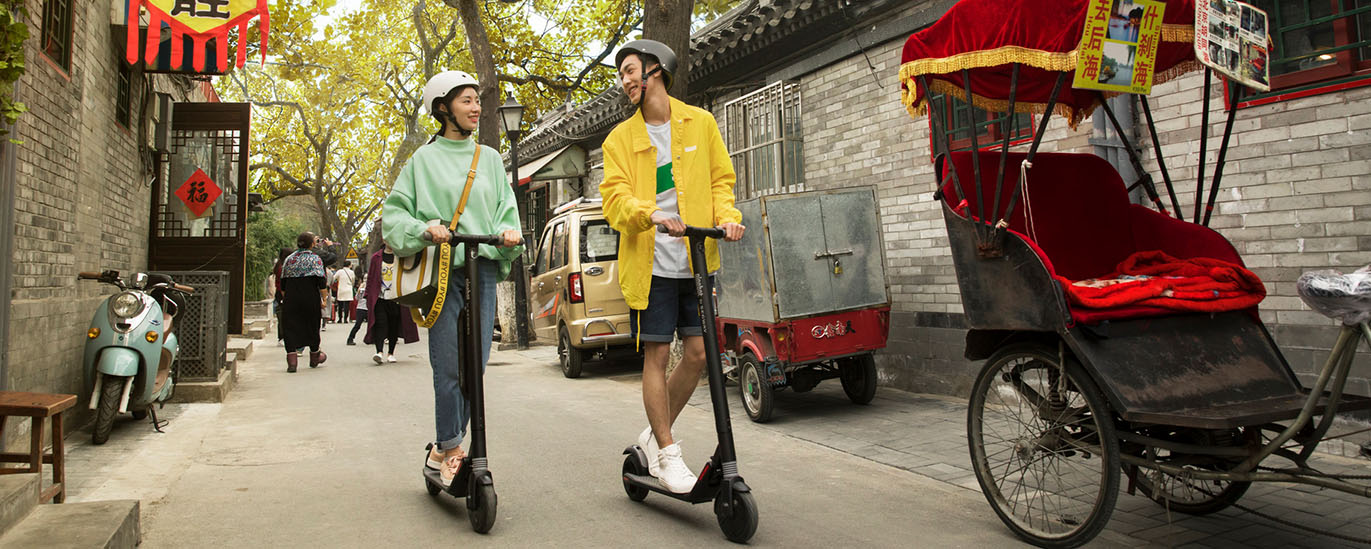
Hutongs
Introduction
A Hutong is a local name given to a narrow lane or small street between rows of single storey houses where Beijingers lived in the past. These Hutongs were built hundreds of years ago during the Ming and Qing dynasty era between 1368 and 1912 and up to date retain the same traditional culture and way of life of the past times.
These hutongs are as little as 40 centimeters to as wide as 10 meters. The compounds that line the alleys are known locally as "siheyuan" meaning four joined-together courtyards. They are mainly old buildings taking a four-sided layout enclosed by a wall. These dwellings give an insight to the ancient lifestyle of typical locals and have gained a great appeal to tourists who wish to witness first hand the evolution of locals from a simple lifestyle to the rapid urbanized that is China today. The hutong streets and alleys crisscross with each other and meander in confusing ways. It is fun to walk around them trying to uncover and figure them out.
In 1215 Mongolians captured the Beijing area and started to build the Yuan Empire in 1271 and during this time, a 36-meter wide road was a standard street, an 18-meter wide road was considered a small street and a 9-meter wide road was named a Hutong. Therefore the word hutong originated from the Mongolian word hottog that means water well. In ancient times, villagers dug a well and then lived around it.
In the Ming and Qing Dynasty reign, wealthy families like the Qiao Family built their siheyuan compound close to the Forbidden City along hutong lanes and as time passed their number gradually increased. In Beijing, there are many hutongs but all of them maintain a unique charm that keeps attracting tourists all year round. As time went by due to urban development and in the process of giving way to building roads, the number of hutongs rapidly decreased. The remaining ones like Nanluoguxiang and Yandaixiejie Street are remaining ideal hutong destinations for most foreign visitors and Jiuwan and Wudaoying Hutong are the best destinations for sightseeing, shopping, unwinding and trying local delicacies and traditional tea. Now, these courtyards are preserved and most of them are even under the protection of the government.
Things to see and do on a visit
Take a Hutong tour by rickshaw
Riding a rickshaw is the best way to comfortably take a close glance at the traditional settings in a short time but visitors who wish to take a walk by foot or rent a bike can also appreciate the simple and tranquil atmosphere of the traditional settings with locals going by their day to day life.
Visit family’s run restaurants
Visitors who wish to interact on a more personal level with the locals can visit family-owned restaurants where they can learn cooking skills and their meal preferences with regards to health philosophies followed by Chinese locals.
Explore the hutongs at night to hunt for traditional Beijing snacks and eateries
Wudaoying hutong and Baocaho hutong offers a peaceful and quiet destination for visitors who want to catch up, relax or read a book as they savor local snacks, meals, coffee and traditional Chinese tea. There are brunch deals in many of its restaurants and cafes with a wide variety of international cuisines. For visitors who want to try local dishes, there are noodles and dumplings amongst many other local dishes.
Shop at interesting shopfronts
Nanluoguxiang has small thrift shops and brand name stores where people can shop for a variety of interesting souvenirs.
Enjoy quality drinks in hutong cafés and bars
In Fangjia Hutong and Nanluoguxiang Hutong visitors can relax in quiet cafes and bars as they unwind and catch up in the midst of the spirit of local life enjoying locally brewed beers from Peiping Machines and extra large cocktails in stylish bars and cafes. There are live music bands and performances in some of the restaurants.
 Home
Home


