


Email: info@chinavisafreelayovertour.com
Phone: +86-13683536536
WhatsApp/iMessage: +86-13683536536
WeChat: +86-13683536536

Member
Beijing Capital Airport Layover Tours
Beijing Daxing Airport Layover Tours
Private Tour
1 Person $240
2 Person $137
3 Person $132
4 Person $121
5 Person $106
6 Person $91
7 Person $86
8 Person $80
9 Person $76
10 > Person $71
Price Per Person in USD

Travel personnel
Number of rooms
Price : $1269
 NO HIDDEN CHARGES
BEST PRICE GUARANTEE
CATCH UP FLIGHT GUARANTEE
FREE WARM COATS
NO HIDDEN CHARGES
BEST PRICE GUARANTEE
CATCH UP FLIGHT GUARANTEE
FREE WARM COATS
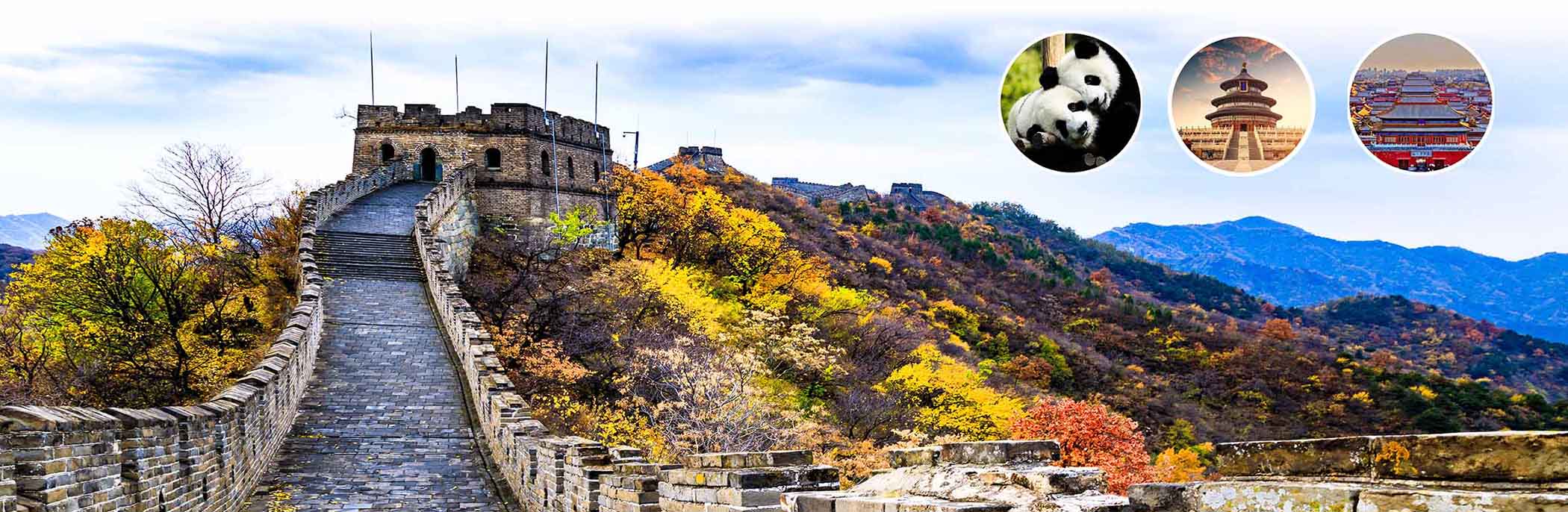
Are you going to have a long layover in Beijing? Take the best chance to know and visit the most famous, historical and cultural sites in Beijing, such as the Tiananmen square (the most important square in the whole China), the Forbidden city (ancient home of emperors) and Mutianyu Great Wall (one of the new 7 wonders of the world). Our professional tour guide and driver will pick you up at the airport, we will take you for a quick Beijing tour and get you back on time for your next flight. booking this layover tour can be a memorable part of your epic trip!
Tour Itinerary
Travel Calendar


Day 1
Airport Pickup, Beijing Olympic Park, Bell and Drum Towers, Houhai Lake, Tiananmen Square, Transfer to Airport
Your friendly tour guide and driver will greet you at Starbucks Coffee in Beijing Capital Airport Terminal 2 or 3. (You will need about 1-1.5 hours to finish the customs clearance and get out)
~ 1 h : Drive to Beijing Olympic Park
Your friendly tour guide and driver will hold your name board and greet you at the arrival hall exit of Beijing Daxing International Airport. (You will need about 1-1.5 hours to finish the customs clearance and get out)
~ 1.5-2 h : Drive toBeijing Olympic Park
~ 0.5 h : Visit Beijing Olympic Park
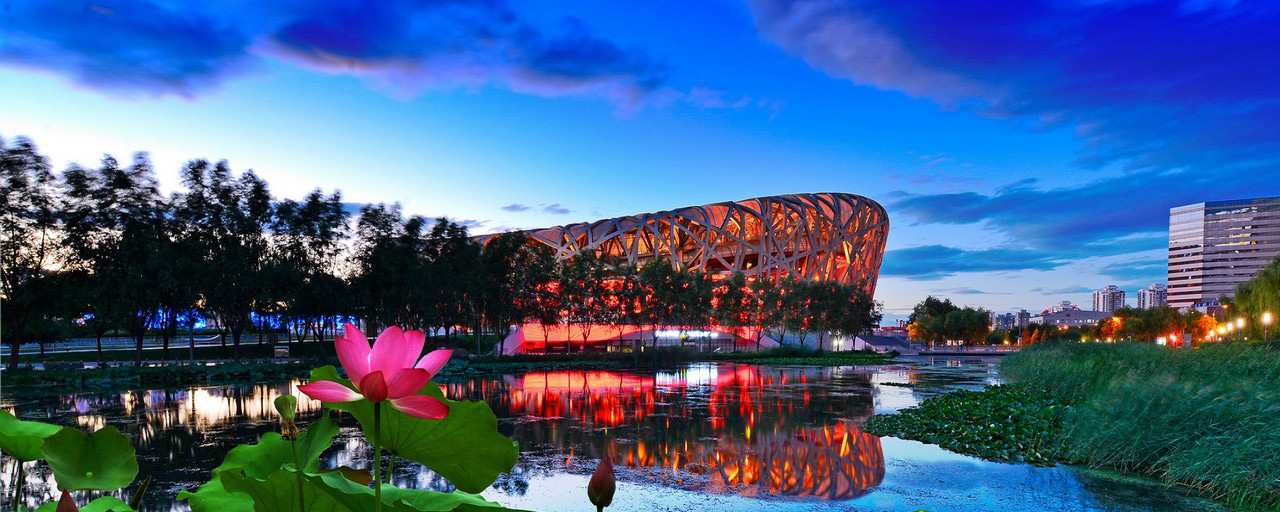
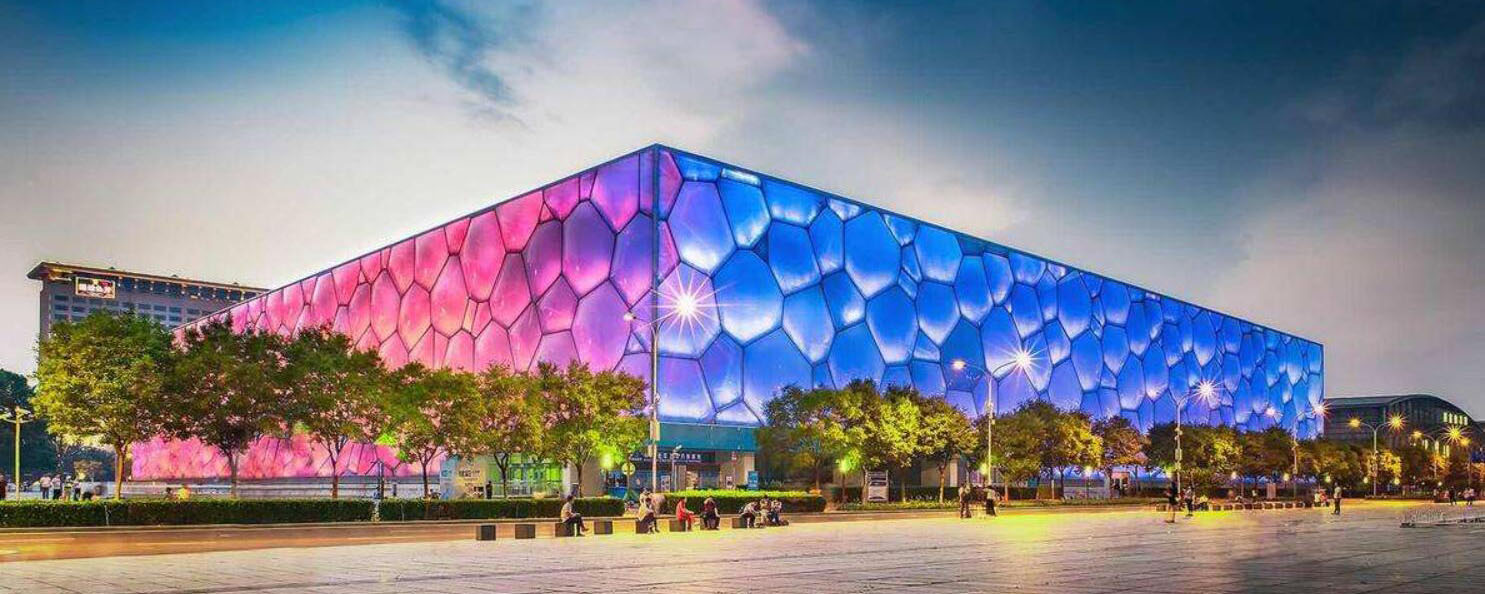
 Enjoy illuminated modern Bird's Nest and Water Cube which are built for 2008 Beijing Olympic Games. The architecture will give you an eye feast of arts and beauty!
~ 0.5 h : Drive to Bell and Drum Towers
~ 20 mins : Visit Bell and Drum Towers
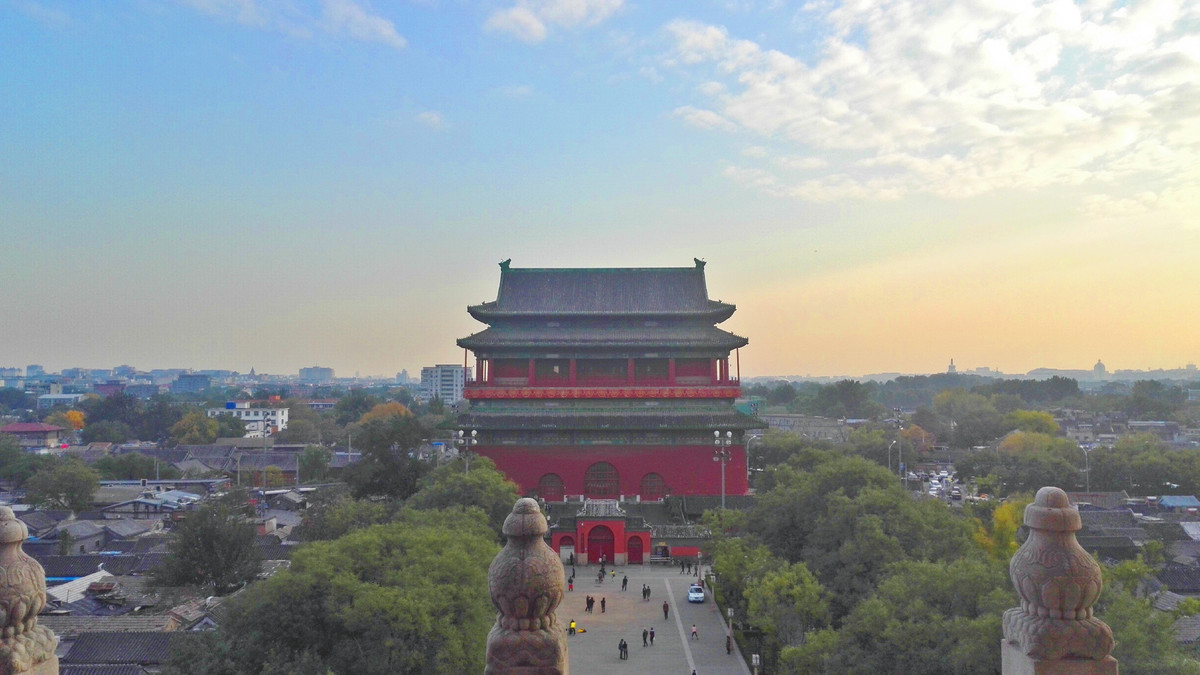
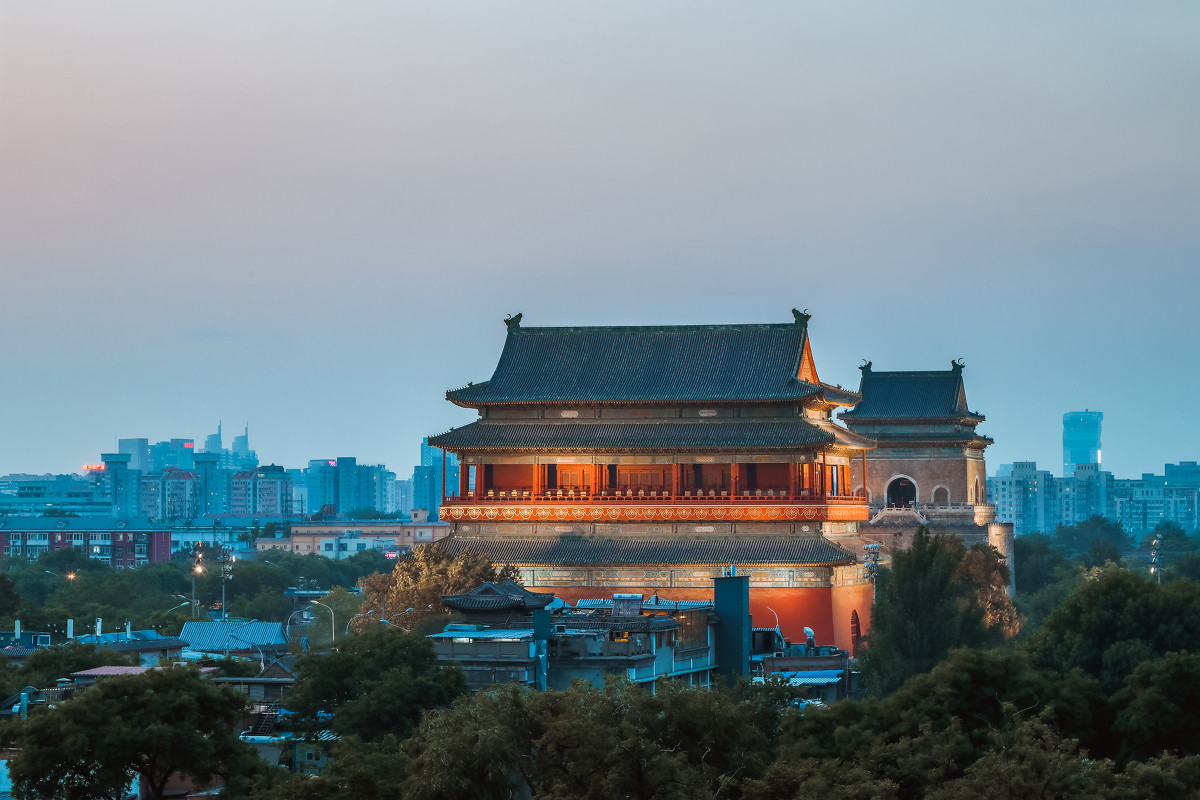
Trace the history of Bell and Drum Tower, and feel the vibe of historical and modern Beijing.
~ 10 mins : Drive to Houhai Lake
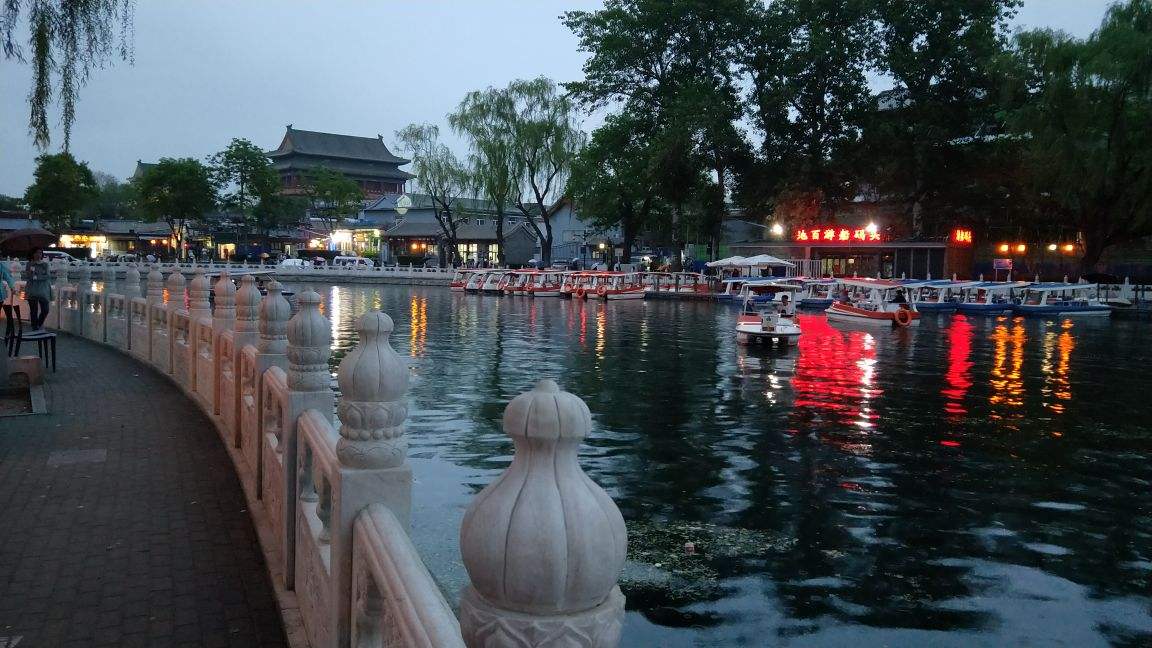
~ 40 mins : Visit Houhai Lake
Enjoy bustling and charming Houhai Lake, where live music and bars are so lively that people would like to join and relax!
~ 15 mins : Drive to Tiananmen Square
~ 20 mins : Visit Tiananmen Square
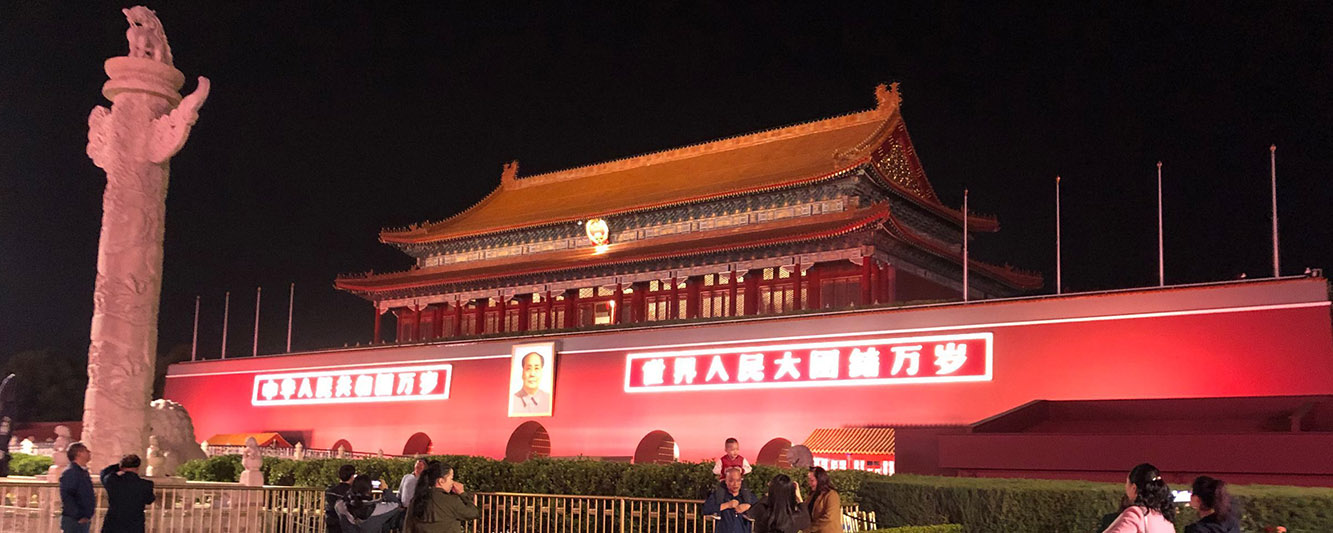
Transfer to solemn Tiananmen Square, overlook the gate and surrounding government buildings decorated with beige yellow lights.
~ 1-1.5 h : Transfer to Airport
The driver will transfer you to the airport for a flight to your next destination. Have a nice journey!
~ 1.5-2 h : Transfer to Airport
The driver will transfer you to the airport for a flight to your next destination. Have a nice journey!
Itinerary
Beijing Capital Airport Layover Tours:
Your friendly tour guide and driver will greet you at Starbucks Coffee in Beijing Capital Airport Terminal 2 or 3. (You will need about 1-1.5 hours to finish the customs clearance and get out)
1 h

Beijing Daxing Airport Layover Tours:
Your friendly tour guide and driver will hold your name board and greet you at the arrival hall exit of Beijing Daxing International Airport. (You will need about 1-1.5 hours to finish the customs clearance and get out)
1.5-2 h

Marvel at modern buildings built for 2008 Olympics Games
Enjoy the charming and gleaming Water Cube and Bird's Nest at night
0.5 h

Trace the Chinese history from enormous ancient bell and drums
Enjoy the spectacular ancient building
10 mins

15 mins

1-1.5 h
Beijing Capital Airport Layover Tours:
The driver will transfer you to the airport for a flight to your next destination. Have a nice journey!
1.5-2 h
Beijing Daxing Airport Layover Tours:
The driver will transfer you to the airport for a flight to your next destination. Have a nice journey!
Includes & Excludes
Professional private English speaking tour guide
Airport pickup and drop off
Air-conditioned vehicle
Bottled mineral water
Meal
Gratuities
Booking Notes
Private Beijing Layover Tour:
The private layover tour is only for you and your team, no need to wait for other travelers. Time-saving.
More flexible for picking up time and address according to your flight details, will send you back to the airport or hotel according to your request.
If your flight delayed, your private tour guide will extend 2 hours of your pick up time wait until seeing you at the airport.
Can customize tour itinerary according to your interests
Payment Methods
Please book your layover tour on the website in advance, and you can pay full payment or a half deposit through PayPal or optional credit card when booking online. Confirmation will be received at the time of booking.
Cancellation Policy
If your flight is canceled or delayed and you inform us at least 4 hours in advance before the scheduled pick-up time, there is no cancellation fee.
If you are not able to get out of the airport for some reasons and inform us before your pick up time, we will refund part of tour fee to you (Excluding driver and guide airport transfer charges). Beijing layover group tour is not refundable.
Reviews

 Review
 Review

benniejay
Yes everything was spectacular and fascinating very professional and prompt services. There were beautiful places to explore and to see in the 4 hours that we had. The comfort and beauty of the China was incredible, The history, culture and way of life of the local people we bumped into during the layover was beyond our expectations. Hiking on the Great wall after driving through a small remote countryside was very relaxing and rejuvenating. It was the best trip ever to experience on a few hours.
We had not previously used a travel agency for touring. The crew including the driver and tour guide were really funny, friendly and knowledgeable. Despite having limited time we still had free time allowing for shopping and grabbing a meal and drinks. Highly recommend this layover in Beijing. Show less

mirceao455
Bucharest, Romania
Great, compact, amazing tour. Our guide Jenny did the best to show us the most important attractions in Beijing in just a 2 day tour. I recommand her tours, she is great with groups, friendly and well prepared. Show less
More
2funworldtravers
Mike and Karen, Tucson, Arizona Show less
More
pedro148595
Highly recommend for everyone coming to Beijing Show less
MoreFAQ
Got Question & Quick Answer


©2013- www.chinavisafreelayovertour.com

Price

Itinerary

Booking Notes

Reviews

FAQ

User Name:
Email:
Password:


Confirm Password:
Verification Code:
Email:
Password:
Email:
New Password:
Confirm Password:
Verification Code:


Beijing Olympic Park
Introduction
Beijing Olympic Park also known as Beijing Olympic Green is situated in the northern end of the central axis of Beijing City near the edge of the North Fourth Ring Road. The park covers an area of 2,864 acres, part of it covering the Olympic Forest Park in a total of 1,680 acres on the northern side, 778 acres make up the central section and 405 acres located in the south are full of venues for the 1990 Asian Games. It is where the 2008 Beijing Olympic Games and Paralympics took place and is venue for the 2022 Winter Olympics.The park was initially designed to contain ten venues but it was afterward transformed into a comprehensive multifunctional activity center for the public.
The park combines human interaction with science and technology yet keeping environmental conservation at the forefront. This is made possible by comprehensive energy infrastructure and a convenient transportation system integrating office and business spaces with hotels and dwelling places all under one location. It is set up in three regions: the north end is occupied by the Olympic Forest Park covering 680 hectares; the central zone covering 291 hectares with the main venues and supporting facilities and the southern covering 114 hectares with the stadium and reserved area.
Things to do and see on a visit
The Southern Section - Former Sports Center and China Ethnic Culture Park
This section of the park integrates sports and nature and was the venue for the 1990 Asian Games. The gymnasium, stadium and Yingdong Natatorium were all used for the games. In addition to this, there is a museum with a collection relics from 56 ethnic groups in China.
The Northern Section - Olympic Forest Park
This Olympic Forest Park is a terminal point of Beijing’s central axis and is divided by the fifth ring road into two making room for a northern garden and a southern garden. On the northern garden is carpeted with greenery and vegetation while the southern garden has an artificial classical garden layout with Aohai Sea and Yangshan Mountain built using ancient technologies.
The Central Section - Bird's Nest and Water Cube
This central section is home to many important landmarks and venues and still bears the spirit of competition. There is an Olympic Village, the Aquatics Centre (water cube), China Science and Technology Museum, Convention Centre, Indoor Stadium and the National Stadium (Bird’s Nest)
Olympic Village
The Olympic Village Olympic Village also known as the athlete’s village is the accommodation residence that was prepared to host athletes and coaches from different countries who were participating in the Olympics. The village catered for their meals, entertainment, leisure activities amongst other personal needs of the athletes and their crew.
Beijing National Aquatics Centre (Water Cube)
The National Aquatics Centre also popularly known as the water cube can hold a capacity of 17,000 people. It was the venue for swimming competitions, diving competitions and other water water sports. At the water cube, the swimmers created history by breaking 25 world records during the Olympics. After the Olympics, the water cube went through a 200 million Yuan transformation and was later re-opened in August 2010. The water cube is now a leisure center containing a sport and fitness section. For the 2022 Winter Olympics the cube is expected to host the curling competition.
Beijing National Indoor Stadium
The Beijing National Indoor Stadium also known as the Folding Fan occupies a total area of 80,900 square meters. The capacity of the stadium is up to 20,000 people and was one of the three main venues during the Beijing Olympic Games. The stadium was used for handball competitions, gymnastics and trampoline sports. After the Olympics the stadium is now used as a first class center for sporting, cultural and entertainment competitions.
The Beijing National Stadium (Bird’s Nest)
The National Stadium is also known as the Bird’s Nest displaying great art in architectural possibilities and resembling a cradle of breeding lives and symbolizing a world of endless possibilities. Its construction was a joint effort of Pierre de Meuron, Jacques Herzog, Ai Weiwei, Stefan Marbach, CADG and Li Xinggang. It is located in the south of the central area of Beijing Olympic Park with the main building being the Bird Nest occupying an area of 258,000 square meters. The structure of the Bird Nest is dominated by a huge portal frame with a total of 24 truss columns. This stadium hosted the opening and closing ceremonies, football finals and athletics of the 2008 Beijing Olympic Games. After the Beijing Olympics Game, the Beijing National Stadium has turned out to be a major landmark in the city, a destination for sporting activities and entertainment. At night it lights up with magical colors brightening the whole park and creating a hypnotic effect.
Ling Long Pagoda
The Ling Long Pagoda is located at the center of the Olympic Park. The pagoda occupies a total area of 4299 square meters, 3636 on the ground area and 663 square meters on the underground. The height of the Pagoda is 132 meters making it the highest building in the Olympic Park and its levels are divided into seven floors. The first floor is occupied by the lobby, the second to sixth floors are studios and the top most floor is the sightseeing deck. The main function of the Pagoda was to broadcast television during the Beijing Olympic Games. The architectural design of this pagoda originates from ancient Chinese cultural elements. The use of steel and glass curtain wall incorporating modern techniques to abstractly express light and clear features is very unique. When night falls the building looks completely charming with colored lights changing harmoniously. It is now home to International Broadcast companies like the BBC, NBC, France Television using Beijing’s real skyline as the studio’s background.
Beijing Olympic Forest Park
The Beijing Olympic Forest Park is the largest urban greening landscape in Asia covering an area of 680 hectares with at least 55 million trees and shrubs with 280 different species of plants. The venue is home to a Hockey Stadium, a tennis court and an archery Field.
After the Olympics, the park became a resort for locals to unwind and spend time with their families hence promoting tourism, fitness and recreation. For the elderly visitors, the park offers a cable car ride for them to fully enjoy the beauty of the landscape. Bike rides are also allowed in the park for visitors who wish to explore on a bike.
Bell and Drum Towers
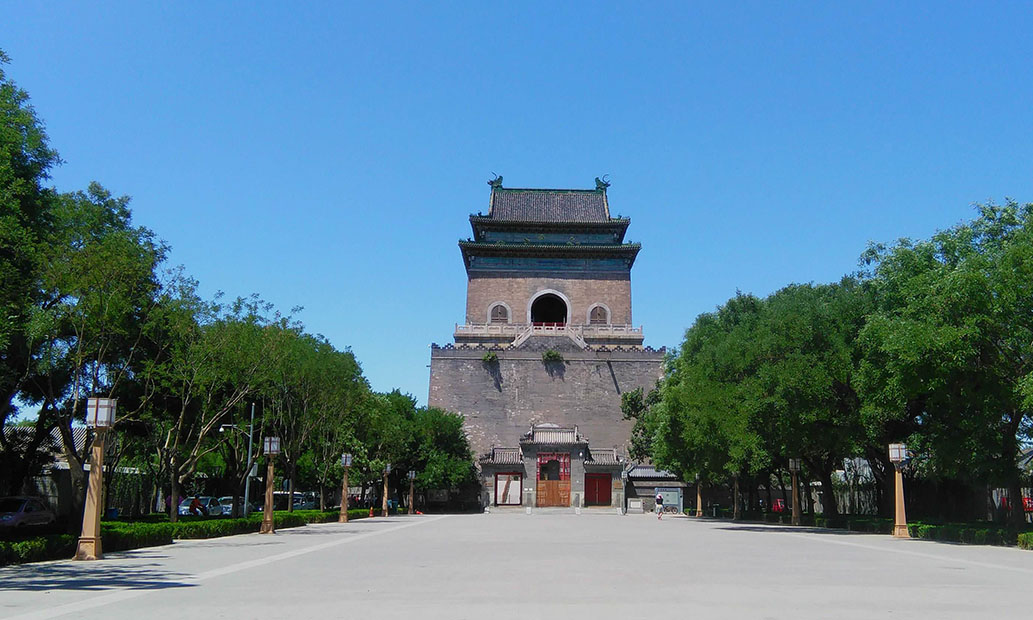
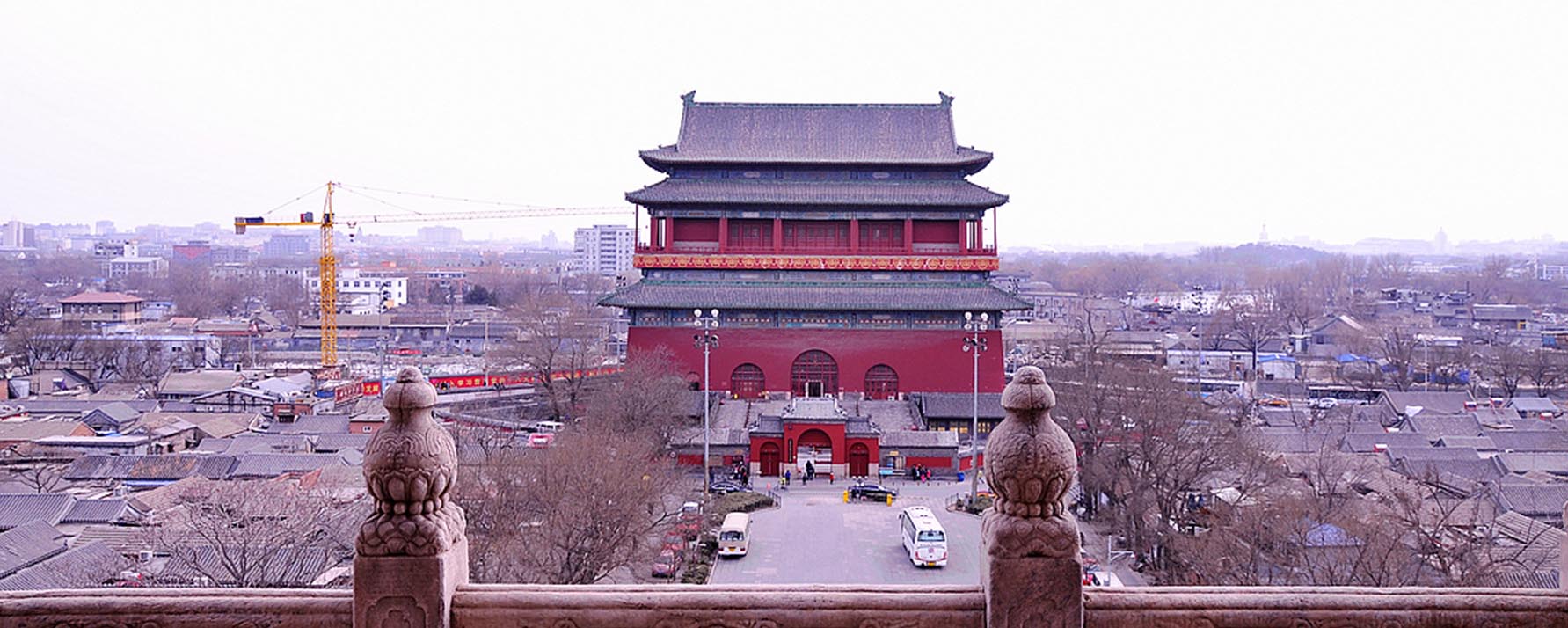
Drum and Bell Towers
Introduction
Located on the north south axis line of Beijing City on a small square north of the Forbidden City, the towers were used for telling time until 1924. They were built in 1272 during the reign of Kublai Khan and were rebuilt after two fires during the Ming and Qing dynasties. During ancient times in the Ming, Qing and Yuan Dynasties they were used to tell time but they were originally constructed for musical purposes. In the Han Dynasty (206 BC-220) people didn’t have a means of keeping time so there used to be a morning bell and a dusk drum that guided people to keep time as they lived and worked. Over time these structures became widely constructed in almost every city in China for the sole purpose of telling time. They were always conspicuous as they were humongous and very high and took the fore and aft layout opposed to the traditional right and left layout.
Legend has it that long time ago there used to be an iron bell in the tower but it was not resonant enough. So the emperor gathered all the best artisans to cast another magnificent bell but three years passed without them achieving the goal. Frustrated, the emperor beheaded the supervising eunuch and then again ordered the artisans to finish the bell within 80 days or else he would behead all of them. Days passed they worked day and night without stopping and on the last day, Hua Yan; the artisan who was in charge was told by his own daughter, Hua Xian that the furnace temperature wasn’t high enough to cast the desired bell so to save his father’s life she jumped into the smelter making the fire blaze powerfully and strongly to the point that the perfect bell was cast. To this day people remember Hua Xian as the Bell Lady to honor her lifetime sacrifice. The huge copper bell hangs at the top of Beijing Bell Tower called and is known as the King of Ancient Bells because its sound can be heard from a long distance away.
Things to do and see on a visit
Drum Tower
Standing at 47 meters high, the Drum Tower was originally built in 1272 during the reign of Kublai Khan but was later rebuilt in 1297, 1420 and 1539. Visitors can see a two-storey structure that was made of wood and on its second floor were 25 drums. One big drum and 24 other smaller drums.
The big drum symbolizes a year and the 24 small drums symbolize 24 solar terms of China. Currently, there is only the big drum that has been hit four times a day at 15 minutes intervals. Every New Years Eve, they are also beaten together 108 times to send blessings to the people of China.
In addition to seeing the humongous drum visitors can also shop for souvenirs at the many stores on the first floor of the building. Visitors can now ascend the tower to have a birds-eye view of the entire city and knock the drums in addition to watching dragon and lion dances.
Bell Tower
The bell tower is situated on Di'anmen Outer Street in Dongcheng District of Beijing at the place where the northern end of the Beijing axle line is located. It is around 100 meters north of Beijing Drum Tower and was first built in the ninth year of Zhiyuan (1272 AD) as the central court of the Wan Ning Temple in the Yuan Dynasty but was destroyed in the war.
The Drum Tower was later rebuilt in the 18th year (1420 AD) of the Ming Dynasty as a bell tower but was unfortunately destroyed again. It was then reconstructed using a brick masonry structure to prevent it from catching fire in Qianlong in the 10th year (1745 AD) of the Qing Dynasty.
The building has two floors, an arched door on all four sides on the first floor and the second floor. In addition, there are stone stairs and a stone window on each side of the four doors. On the second floor is the largest and heaviest bell in China hanging on an eight square wooden frame. The octagonal bell cot with a huge copper bell cast in it measures 7.02 meters in height, 3.4 meters in diameter and 63 tons in weight. The bell is referred to the King Bell since it was the biggest and heaviest ancient bell in ancient China and it also made the most powerful sound that could be heard from dozens of miles away. Initially, the iron bell was rung in the Yongle era but its sound wasn’t as pleasant and was later replaced by the copper bell but it remains against a wall and has been part of the collection belonging to the Ancient Bell Museum attached to the Great Bell Temple for many years. They are also two 2 meters long wooden logs hanging sidewards that are used to ring it
Houhai Lake
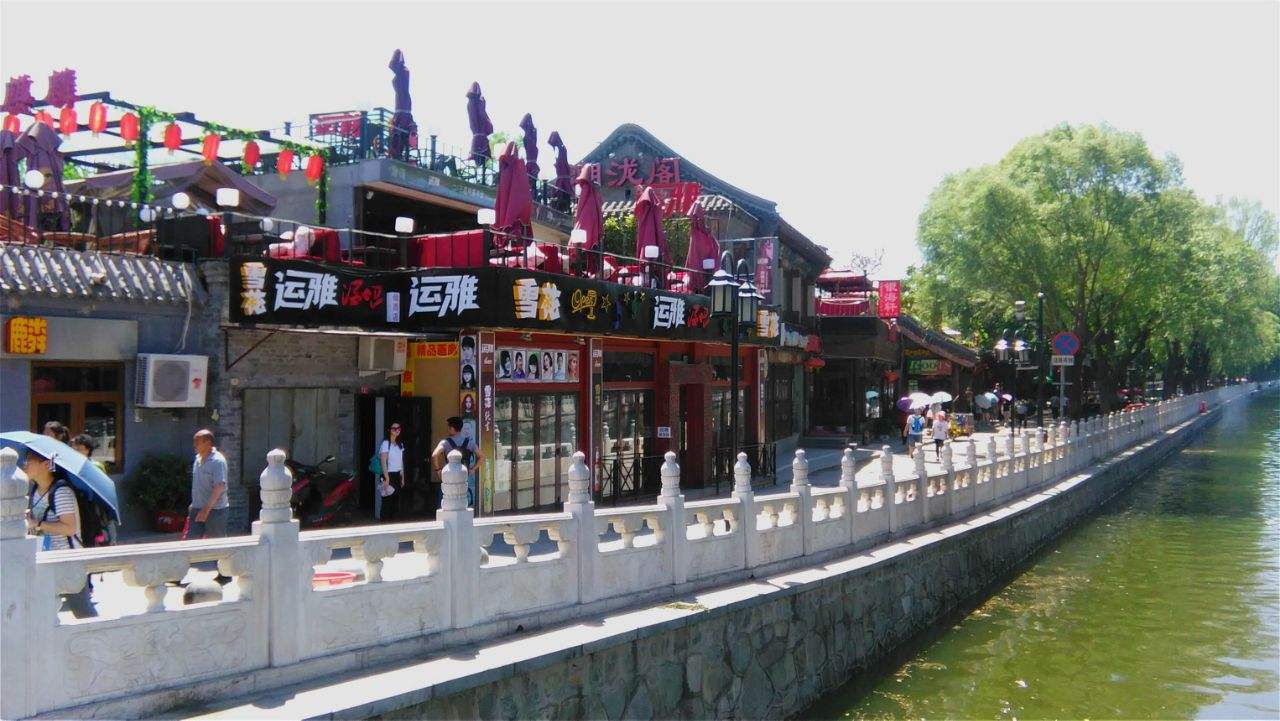
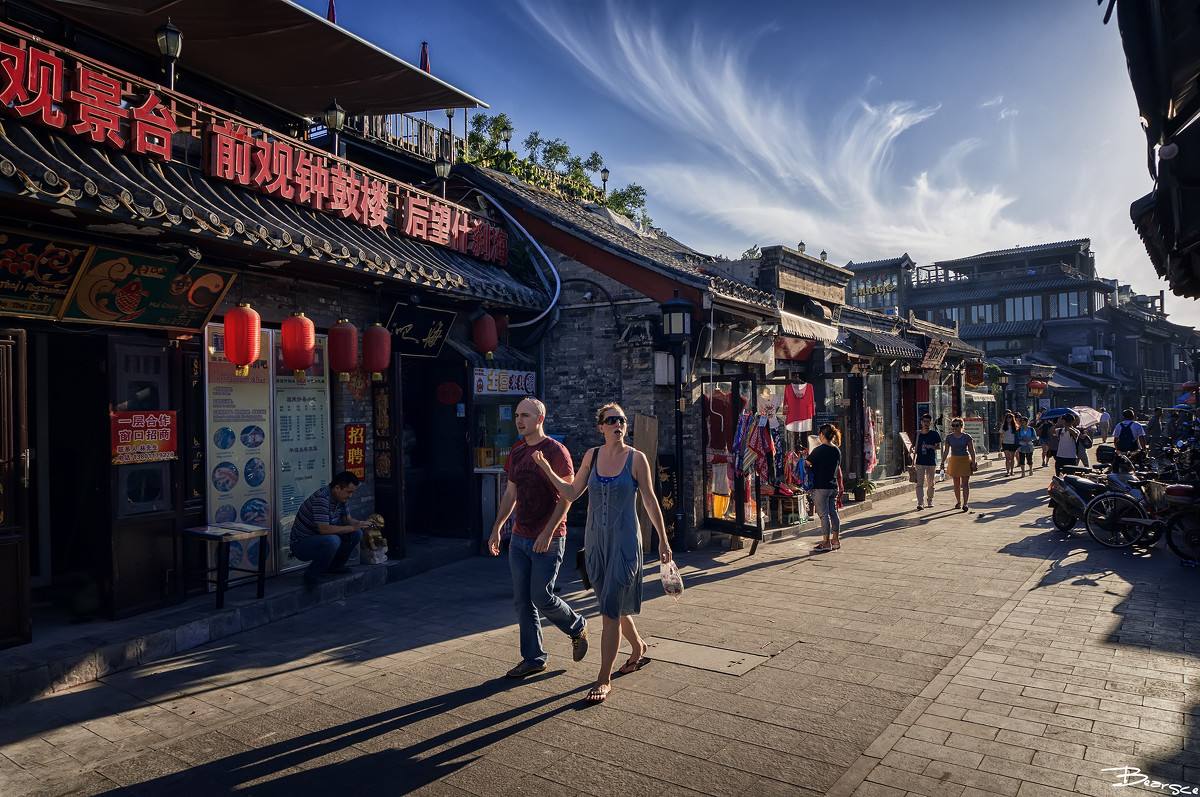
Houhai Lake
Introduction
Houhai is a large artificial lake in northern downtown Beijing located 4 kilometers north of the Forbidden City that derives its name from a Chinese name meaning back sea. The lake belonged to the royal family during the Yuan Dynasty and the surrounding area has always been a successful commercial site with workshops, opera stages and shopping centers. It is now open to the public.
The lake covers an area of 87 acres and to the front side, it is bordered by Qianhai (Front Sea) and to the west by Xihai (West Sea). It was perceived according to Daoism that the waters of the lake are connected to the “dragon vein” which is an integral and invisible artery that can maintain tranquility, prosperity and peace. So many monks set up temples in the area, nobbles and other government officials also built their gardens and vacation mansions and around the lake area,
Things to see and do on a visit
Sightsee
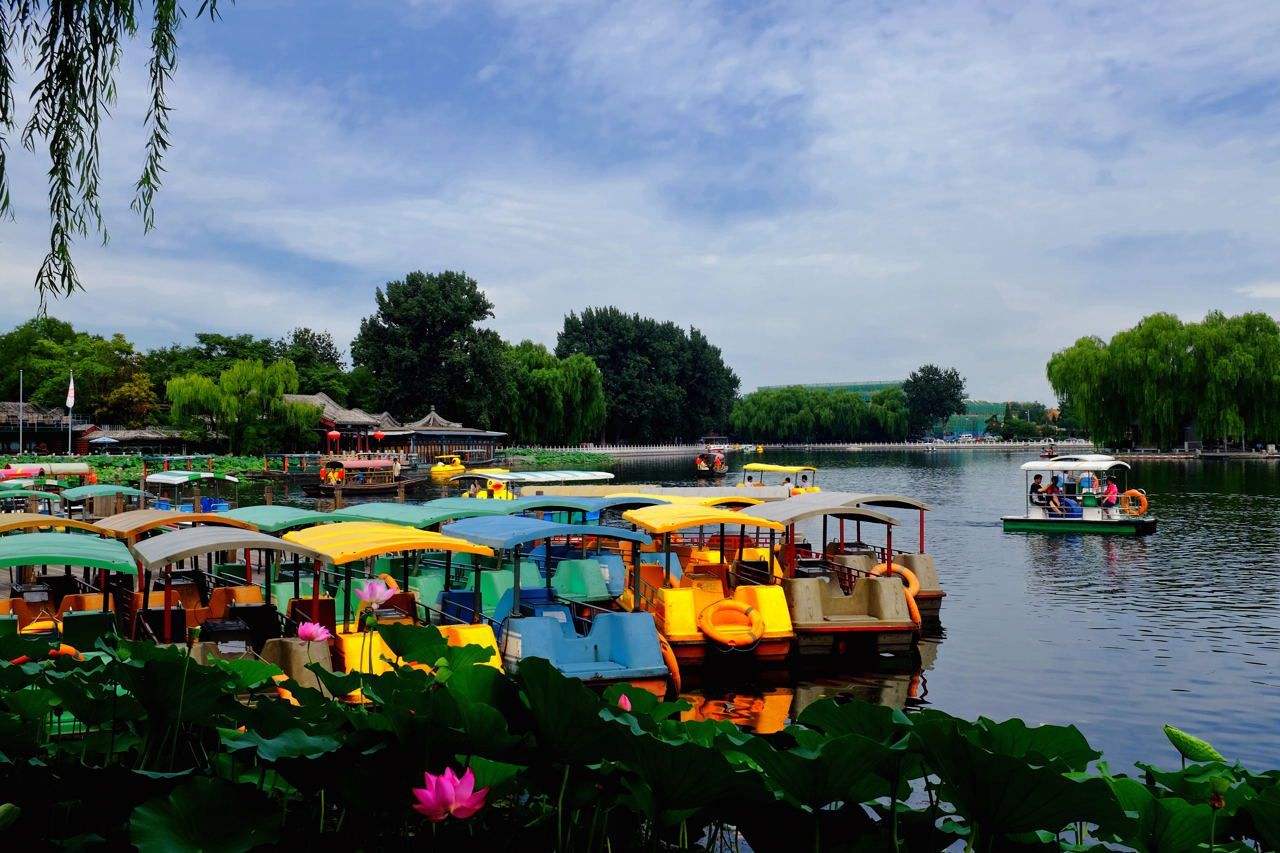
This lake has the most scenic area surrounded by willow trees and Hutongs. Visitors can stroll or take a rickshaw to explore the sights and sounds of the area that is laid back and has a completely relaxing atmosphere. The Hutongs are lined at the back streets and have a variety of stores that give shoppers to experience the cultural alleyways as they search for unique souvenirs, jewelry and antiques.
Taste local snacks and cuisine
Houhai is home to many restaurants, cafés and teahouses where visitors can savor local cuisine and snacks in the lakeside dwellings dotted in the hutongs. There are delicious tasty roasted duck, mutton and chicken meals prepared exquisitely in a mix of authentic southern China dishes. In addition, there are many tasty snacks such as Rice Cake, Sesame Seed Cake and Pea Flour Cake
Nightlife
The Hutongs bordering Houhai are renowned for its active nightlife since the early 2000s. Many residences along the lakeshore were converted to bars, restaurants and cafes. It is a hit amongst foreign tourists, expatriates and young hip locals who gather here to unwind and interact after a long day of work. Houhai become popular in 2003 after the modern establishments on the Lotus Lane with the bar street
Boat riding and skiing
There are boat rides on the lake except during winter when the lake becomes frozen and people can ski and skate. The most popular of the wintry skate is the loved chair-skate.
Former Residences
The Hutongs neighboring the lakeside were homes of several famous Chinese officials and are worth visiting such as court officials and celebrities such as Sun Yat-sen's wife, Soong Ching-ling, the famous poet Guo Moruo, Prince Chun and Prince Gong.
Tiananmen Square
Introduction
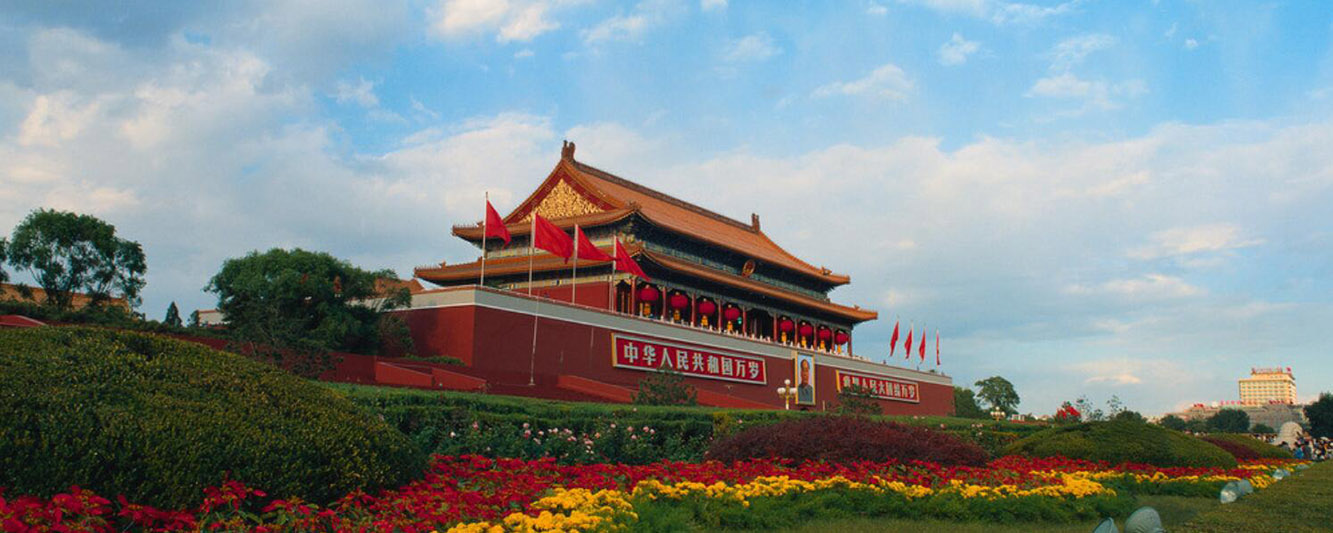
Tiananmen Square is also known as the gate of heavenly peace and is located in the center of Beijing, at Changan avenue. Tiananmen Square is named after Tiananmen Gate which is the entrance to the Forbidden City. The Square was originally built in 1651 and was later enlarged by four times when it was cemented with concrete in 1958.
It is enclosed by two imperial gates in the north and south with the north side being the Gate of Heavenly Peace also known as the Tiananmen Gate and the Front Gate towards the south known as Qianmen Gate.
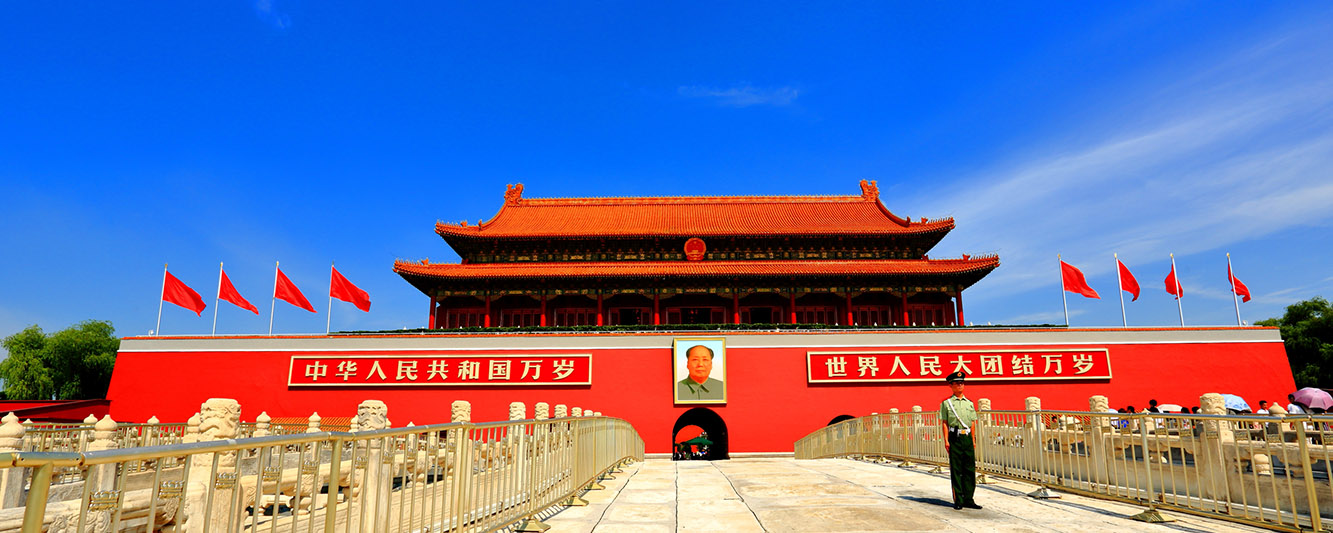
As you approach Tian'anmen there is a Golden Water Bridge, a pair of columns made from white marble sculptured with lion and dragon designs that is not only for decoration but also the expect for the emperor.
Things and activities to do on a visit
Chairman Mao Zedong Memorial Hall
Located on the southern side of Tiananmen Square, this hall is divided into three parts and in one of the halls is the place where peple admire Chairman Mao at his crystal coffin surrounded by fresh flower bouquets. People offer respect to the greatest founder of the modern nation of China.
The Great Hall of the People
Situated on the west of Tiananmen Square is where the Great Hall of the People is located. This building was constructed in 1959 and is the site where congress meetings and diplomatic activities take place. Twelve marble posts are in front of the hall which has three parts the Central Hall, the Great Auditorium and a Banqueting Hall. The floor of the Central Hall is paved with marble and crystal lamps hang from the ceiling.
Monument to the People's Heroes
At the center of Tiananmen Square is a granite and marble monument that weighs over 10,000 tonnes that is known as the Monument to the People's Heroes built in 1952 and is one of the largest monuments in China's history. On the monument, Chairman Mao engraved “Eternal glory to the People's Heroes”, and visitors can testify the gradual development of Chinese modern history. It serves as a memorial to heroes who lost their lives in the revolutionary struggle and conflicts of the early 19th and 20th centuries from the First Opium War to the Civil War.
Tiananmen Tower
Built in 1417 during the Ming Dynasty at the north end of the Square, this tower has been built and rebuild through the course of time until 1661 during the reign of Emperor Shunzi when it was remodeled, rebuilt and named the Tiananmen Tower. It measures 38 meters in height and 66 meters in length and has five arched gates, only royalty was allowed to enter from the middle gate. Today the tower is widely recognized by the Chairman Mao portrait which hangs above the archway gates.
China National Museum
The China National Museum location is right in front of the Great Hall of the People and was constructed in the year 2003 with a set up of a mix of Chinese History Museum and Chinese Revolutionary Museum. It occupies close to 200,000 square meters in exhibition space and is the third largest museum in the world with over a million priceless relics dating back to 1.7 million years. The museum is home to cultural relics, material objects, books, pictures and models to present the growth of China through its long history and rich culture of China. Get into concise Chinese General History, and visit remains of the prehistoric Yuanmou Man.
Flag Raising and lowering Ceremony
This is one of the focal points in the Tiananmen Square attractions flying high in the sky above Tiananmen Square. A seven-ton flagpole that is renowned for the raising ceremony takes place very early in the morning and lowering takes place in the evening and many tourists both from home and abroad look forward to seeing the guard of honor raise the flag and change guard. The reviewing stands flanks were opened on the west and the east sides to watch the ceremony. The flag is affixed and raised in time to the rising sun and the lowering is at dusk over an approximate two minutes and seven seconds after which the national anthem plays afterwards.
Statues
Situated at the back of the Monument of the People’s Heroes there are a couple of statues that pay tribute to workers, soldiers and just normal people who took part in China’s revolutions; the eastern statue represents the New Democratic Revolution period and the western side statues pay homage to those who contributed to the construction of chairman Mao’s leadership structure.
Magnificent Flower Beds
Tiananmen Square is home to the most extraordinary and ever-changing colorful floral displays according to seasons and it gets into its peak during special occasions and national holidays.
 Home
Home


